Configurations and Design Options for Light Relief
Depth, geometry, and rhythm as variables for defining the character of a surface.
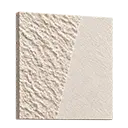
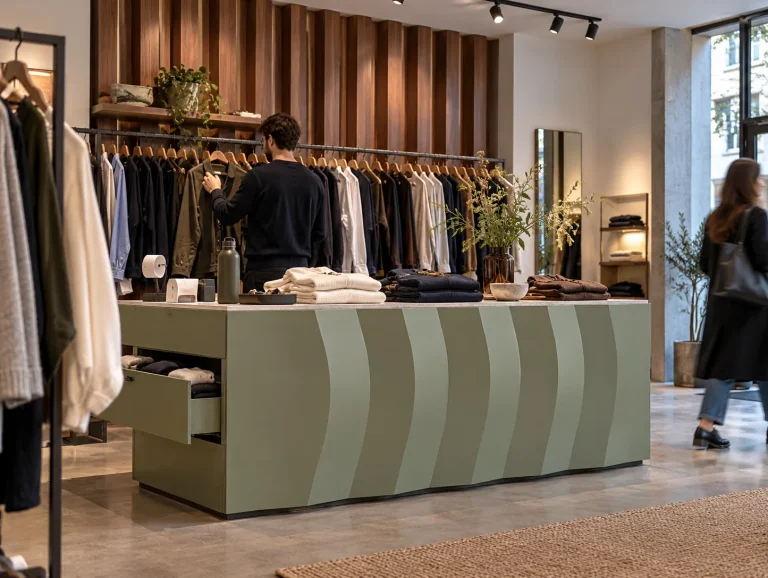
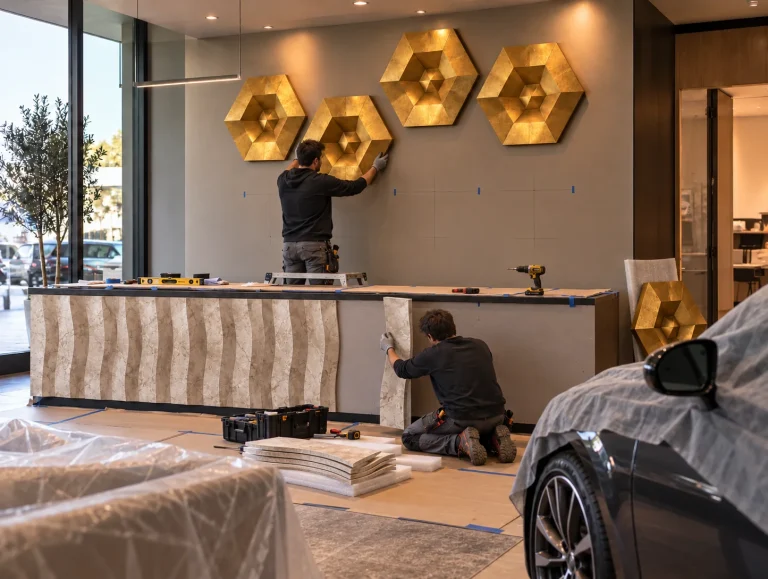
Subtle relief allows for different configurations within the solutions developed by Actilum, adapting the depth, geometry, scale, and visual continuity to the aesthetic of each project.
The final perception depends on how these variables relate to one another and on their proportion in relation to the space.
Configurable variables
The “Light Relief” setting can be defined using various variables that, when combined, determine the final perception of the surface:
Depth · geometry · rhythm and repetition · orientation · scale and proportion · visual continuity · texture · color · graphic elements · finish
Each variable influences the result and can be examined in relation to the others and to the characteristics of the space.
These variables also serve as a basis for exploring and comparing different configurations before determining the most appropriate solution for the project.
Depth of relief
Depth determines the sense of presence that the relief takes on in the plane.
A more restrained configuration allows for subtle surface variations, while greater projection reinforces the geometry, rhythm, and shadow.
In “Light Relief,” this depth remains tied to the surface. When the form takes on greater substance and spatial presence, the solution shifts to “Architectural Volume.”
Geometry
Geometry defines the formal language of the cladding.
The configurations can incorporate lines, changes in direction, geometric shapes, and relationships between planes to create regular compositions or ones with varying degrees of variation.
The choice is made based on the nature of the project and the options available within the Actilum solutions.
Rhythm and Repetition
Repetition allows the relief to be organized into sequences and patterns that create rhythm across the surface.
These patterns can remain constant or incorporate variations to create shifts in perception and adapt the composition to different areas.
Guidance
Orientation changes the way the same geometry is perceived.
Changes in direction allow you to create transitions, alter the rhythm, or establish areas with varying levels of prominence while maintaining a common logic throughout the composition.
Scale and Proportion
The scale of the relief is considered in relation to the dimensions of the surface and the distance from which it will be viewed.
The same geometric form can produce different results when its proportions are altered; therefore, the configuration must be evaluated within the space and not merely as an isolated element.
Visual Continuity
Relief can be created by seeking continuity between different sections or areas to achieve an integrated surface.
This allows for extending geometries, maintaining directions, and creating transitions along walls of different dimensions.
Texture, color, graphics, and finish
Architectural relief can be combined with other surface variables to expand design possibilities:
Relief + texture + color + graphics + finish
These combinations make it possible to develop a custom architectural cladding system and align it with the project’s visual and material identity.
Configure according to the desired result
Add depth in a subtle way
Work with subtle variations that alter the perception of the surface while maintaining a close relationship with the plane.
Create rhythm and shadow
Combine depth, repetition, and orientation to create a composition with greater visual impact.
Highlight an area
Modify scale, geometry, or depth to establish different levels of prominence.
Maintain visual continuity
Extend the same geometric logic across different areas to achieve an integrated reading of the whole.
Integrate the project’s identity
Combine relief, texture, color, graphics, and finishes within compatible configurations.
Configure and Validate
The appropriate combination is determined based on the surface dimensions, scale, depth, geometry, and the desired result.
When the project requires it, Actilum can develop a sample or prototype to validate depth, scale, proportion, and perception before production.
Applications of Subtle Textures in Architecture and Interior Design Architectural relief to add depth, rhythm, …
Configurations and Design Options for Light Relief Depth, geometry, and rhythm as variables for defining …
Technical Information and Support for Light Relief Guidelines for specifying, integrating, and validating architectural relief …
The images on this page are conceptual renderings generated using artificial intelligence.