Configurations and Design Options for Textured Surfaces
Various options for creating a surface tailored to the character of each project.
Textured surfaces can be configured using various visual and tactile variables from the range of solutions developed by Actilum.
Customization builds on these possibilities to define a combination suited to the project, while ensuring a controlled and reproducible result.
Reproduction of Materials and Textures
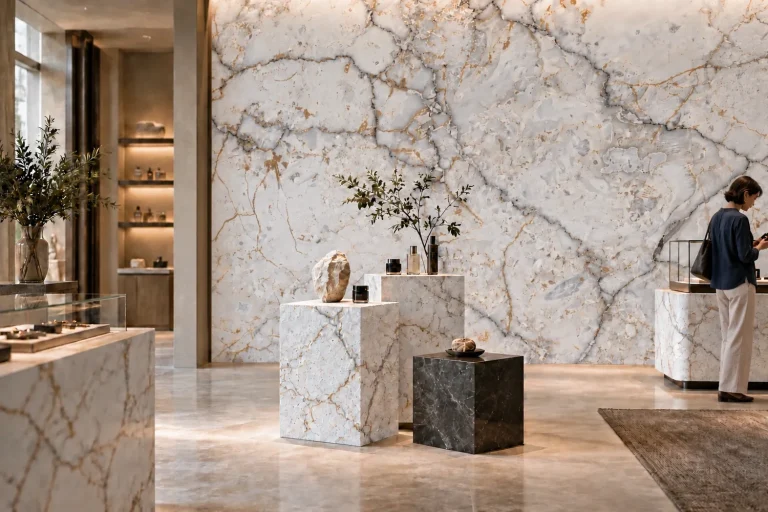
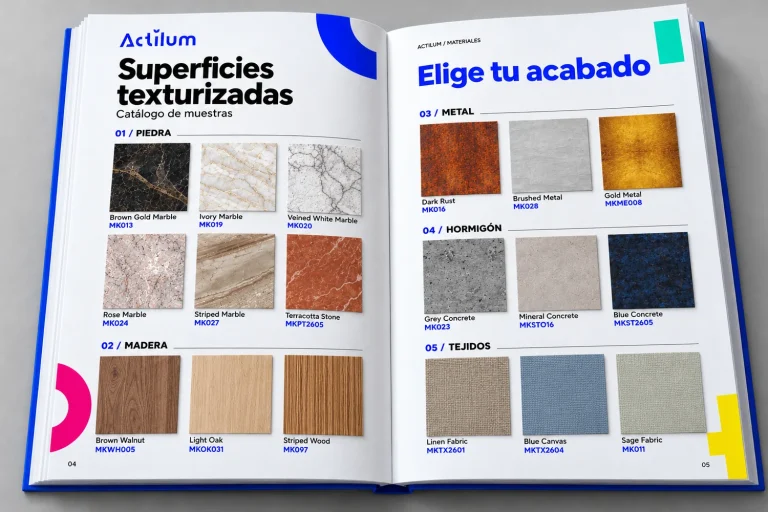
We can start with specific examples of stone, wood, marble, concrete, metal, textiles, or other surfaces to explore how to reproduce or adapt them within our capabilities.
The goal is not merely to replicate their appearance, but to interpret the visual and tactile features that help define their character.
This allows us to use the same reference in different areas or reproduce it later while maintaining greater consistency across our projects.
References and Custom Finishes
Existing material references are one possible starting point. We can also work with our own textures, combinations, and finishes from the Actilum solutions catalog, developing a design that does not necessarily rely on replicating a familiar surface.
This allows us to create a unique identity for each project by combining appearance, texture, color, graphics, and finish according to the desired result.
Texture and Tactile Relief
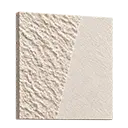
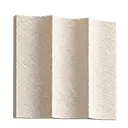
Texture can incorporate varying degrees of tactile perception and surface variation, ranging from subtle effects to reliefs with a more pronounced presence.
In this family, relief primarily functions as part of the surface finish. When depth takes on greater architectural significance and more noticeably alters the way the plane is perceived, the solution becomes part of the Light Relief family.
Color and Color Reproduction
Color can be treated as a variable independent of the material’s texture and appearance.
This makes it possible to adapt a surface to a specific color palette, maintain consistency among different elements of the project, or incorporate colors associated with a visual identity.
When a project requires reproducing a reference color, its match is analyzed and validated based on the capabilities of the solution.
Integrated graphics
The graphic can be incorporated as part of the surface design, blending with texture, color, and finish.
It can be used to incorporate patterns, visual elements, or features linked to the identity of a space or a brand.
Endings
The finish helps define the overall perception of the surface and can alter the way color, texture, and graphics are perceived.
The choice is based on the selected solution, the application, and the desired visual and tactile result.
Combining Variables
The various possibilities do not have to be addressed in isolation. A single surface can combine:
Appearance + texture or relief + color + graphics + finish
Combining these variables makes it possible to develop everything from adaptations of existing designs to surfaces with their own unique identity.
Choose based on the desired result
- Adapting a material reference
Start with an existing reference and study its appearance and tactile characteristics within the available possibilities. - Create a unique identity
Combine texture, color, and finish to develop a distinctive surface within the Actilum collection. - Integrate a brand identity
Incorporate color, graphics, and texture to translate elements of the project’s visual language into the space. - Create a sensory experience
Emphasize touch and surface perception through different textures and surface reliefs. - Maintain continuity
Repeat or adapt a design in different areas to maintain a consistent visual and tactile experience.
Configure, check, and validate
The right combination depends on the desired result, the application, and the specific characteristics of the project.
When appropriate, I can validate the proposal by providing a physical sample in advance to check the texture, feel, color, and finish before moving forward with production.
Applications of Textured Surfaces in Architecture and Interior Design A solution capable of adapting to …
Configurations and Design Options for Textured Surfaces Various options for creating a surface tailored to …
Technical Information and Support for Textured Surfaces The information needed to confidently integrate and specify …
The images on this page are conceptual renderings generated using artificial intelligence.