Applications of Textured Surfaces in Architecture and Interior Design
A solution capable of adapting to different spaces, uses, and identities.
Textured surfaces and decorative finishes for interior walls allow for the treatment of specific areas or the creation of larger-scale compositions, adapting their characteristics to the function and character of each environment.
The ability to reproduce existing designs, develop original concepts, and achieve consistent results facilitates their use in projects where customization must coexist with criteria of repeatability, renewal, and integration.
Premium retail
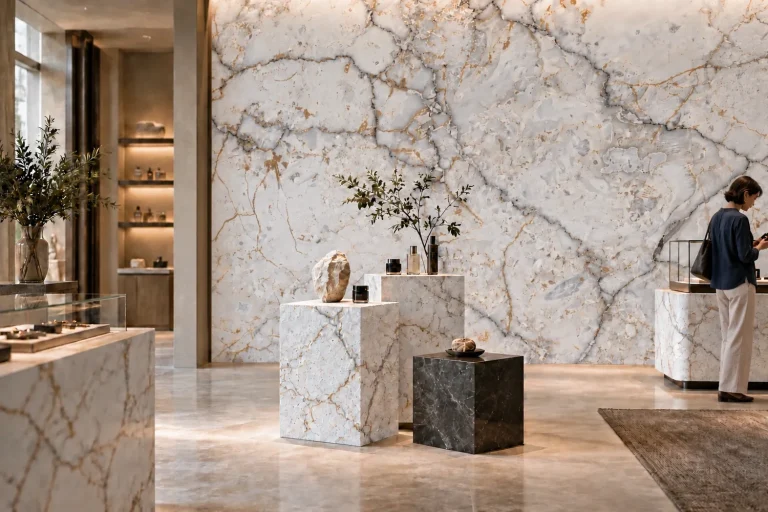
In retail spaces, they can be used to create product displays, feature walls, storefronts, fitting rooms, or customer service areas with a recognizable identity.
The ability to repeat the same design makes it easier to maintain consistency across different areas, locations, or future renovations, while also allowing colors, textures, and graphics to be adapted to the brand concept.
Hospitality
Lobbies, guest rooms, headboards, hallways, bars, and common areas can incorporate surfaces with different sensory qualities to enhance the character of the interior design.
Compared to certain conventional solutions, some configurations may offer advantages in terms of handling, installation, or renovation, depending on the characteristics and materials being compared.
Offices and Showrooms
Corporate reception areas, meeting rooms, and exhibition spaces can use the surface as a tool to convey identity and complement the presentation of products or services.
The combination of texture, feel, color, and graphics helps maintain a recognizable visual language across different areas, fostering a more cohesive overall image.
Branding and Brand Spaces
Corporate identity can extend beyond logos and conventional graphic elements.
Colors, patterns, material references, and tactile effects can all be part of a single design concept, turning the surface itself into a tool for communication and differentiation.
Contract
In projects that require applying the same solution in different locations, repeatability helps maintain common aesthetic standards and facilitates future expansions or replacements.
Customization within a controlled palette also strikes a balance between a unique identity and consistency in the final result.
Museums and Cultural Venues
Surfaces can be used to guide visitors along routes, provide context for exhibition areas, or give specific environments a distinct identity.
Their ability to combine visual and tactile elements expands the possibilities for design when the materiality itself becomes part of the visitor’s experience.
A solution that can be adapted to different needs
According to the project, a textured surface can serve various purposes: to recreate a material reference, add a tactile dimension, reinforce a brand identity, maintain consistency across spaces, or facilitate future renovations.
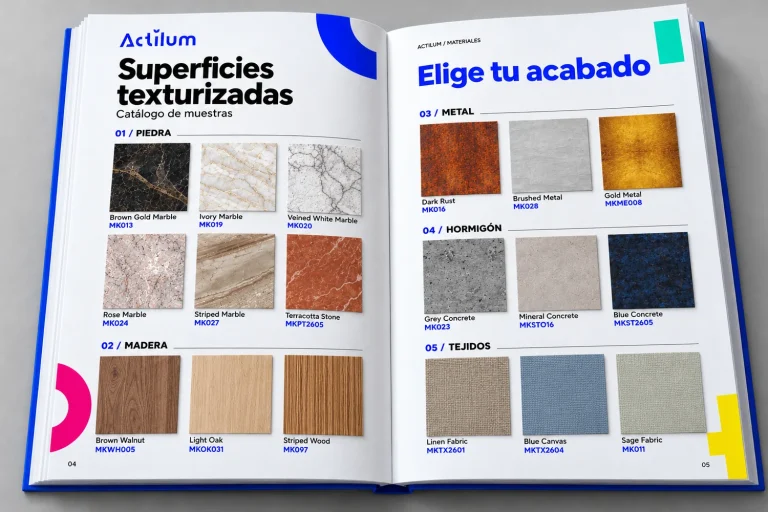
The choice will depend on the desired result and the options available in the Actilum catalog.
Confirm the selection
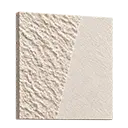
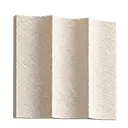
Physical samples of textures and finishes allow you to directly evaluate the different options and compare their appearance and feel.
In medium- and large-scale projects, they can also be used to validate the selected proposal before moving forward to production.
Applications of Textured Surfaces in Architecture and Interior Design A solution capable of adapting to …
Configurations and Design Options for Textured Surfaces Various options for creating a surface tailored to …
Technical Information and Support for Textured Surfaces The information needed to confidently integrate and specify …
The images on this page are conceptual renderings generated using artificial intelligence.