


High Efficiency
More Light, Less Consumption
In the search for solutions to maximize the performance of lighting systems, Actilum presents its High Luminous Efficiency technology .
This development represents the ability to achieve a significant breakthrough in reducing energy consumption without sacrificing essential brightness to achieve the desired result.
Simplicity and robustness
40% more efficient than conventional LEDs
Actilum’s High Efficiency systems are distinguished by their simplicity and robustness, exceeding the efficiency of conventional LED systems by 40%.
This achievement translates directly into 30% to 40% lower energy consumption.
Lower voltage drop, longer life
A key aspect of our improvement to achieve this goal lies in increasing the amount of copper in the circuits.
This optimization has reduced voltage drops, improving stability and extending system life.
Less heat, less consumption, lower cost
40% additional energy efficiency
When we talk about High Efficiency in lighting, we refer not only to superior performance, but also to a more effective management of the heat generated.
Our systems guarantee a 40% reduction in heat production, which translates directly into 30 to 40% less energy consumption to maintain the same luminous flux.
High Efficiency Power Supplies for Lighting Systems
High efficiency power supplies, designed to operate in the 40 to 60 volt range, stand out as key elements in advanced lighting systems.
Combining efficiency and versatility, these sources offer energy-efficient solutions that can be tailored to the specific needs of each application.
These sources ensure efficient conversion of electrical energy to light, minimizing losses and maximizing energy utilization.
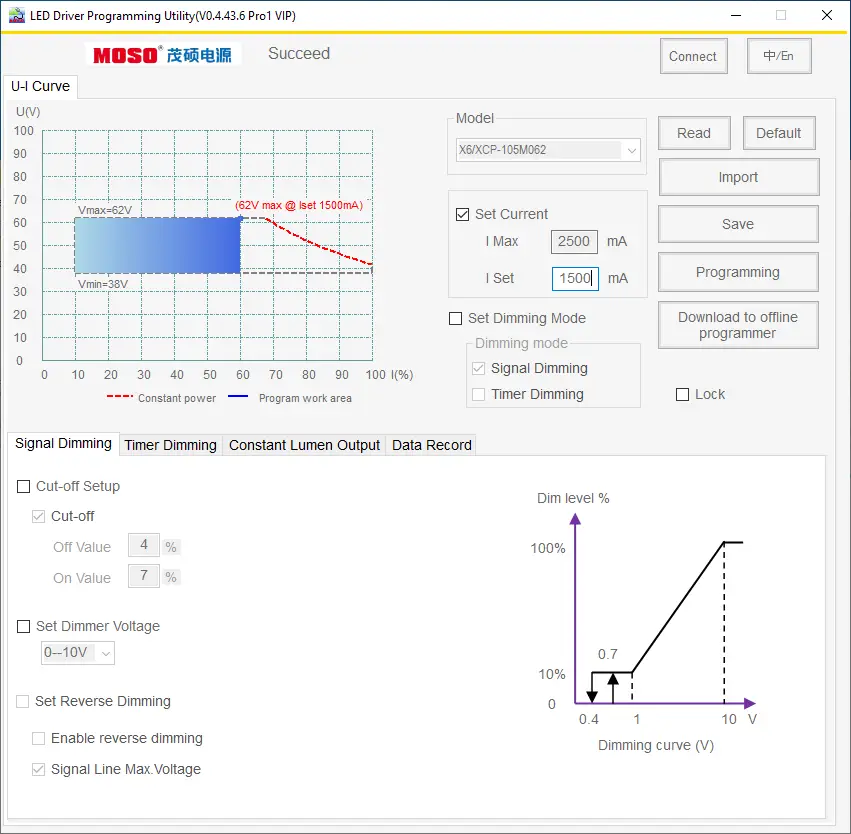
The ability to program the power supply to milliamp levels allows detailed control over the current supplied to the lighting system.
This is essential for adjusting the luminous intensity and optimizing energy consumption according to specific needs.
Control from Actilum or user PC
Flexibility is a priority.
These power supplies can be programmed from Actilum or directly from the user’s PC.
The software provided by the manufacturer allows precise configurations and adaptability to the changing demands of the lighting environment.
Strategy in the use of electronic components
The constant search for energy efficiency has led to a significant evolution in circuit design, specifically in the selective elimination of key electronic components, such as resistors and diodes, among others.
This approach is based on the premise that certain components are no longer needed in the circuit, which contributes to energy efficiency by eliminating unnecessary heat generation.
This decision is based on the evolution of power supplies. In this new paradigm, the power supply no longer “attacks” the system voltage, but is oriented towards the current (mA).
This modification in energy management transforms the source into a more adaptable element of the system, adjusting dynamically, varying the mA according to the specific needs of the system.
Difference between effective and efficient examples
The difference between effectiveness/efficiency is as follows:
Luminous efficiency is defined as the ratio of emitted light to total energy consumption, while luminous efficacy refers to the ability of a light source to convert electrical energy into luminous energy.
Luminous efficiency
An LED lamp with a luminous efficiency of 100 lm/W means that it emits 100 lumens of visible light for every watt of electrical energy it consumes.
The higher the lm/W value, the more efficient the bulb is in terms of converting energy into light.
Imagine two different light bulbs, both with a luminous efficiency of 80 lm/W. Both convert the same amount of electrical energy into light efficiently. However, one of these bulbs could emit the light in a more focused and directed manner, while the other could scatter the light more widely.
Depending on the initial requirements for one or another form of illumination, the efficiency of the light source will depend on how well it illuminates.
Efficiency formula
The general formula for calculating efficiency is expressed as the ratio of desired (or useful) output to total input.
Luminous Efficiency = Luminous flux (lumens) \ Electrical power consumed (watts)
The higher the result, the higher the luminous efficiency of the light source.
So which luminaire is more efficient?
Determining the efficiency of a luminaire depends on several factors, including the type of technology used, the specific application and the lighting objectives.
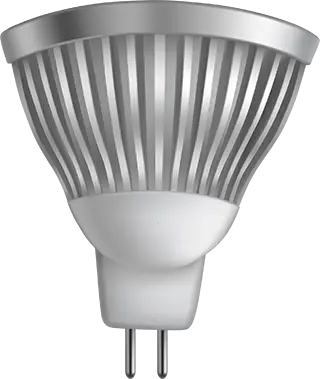
Halogen bulbs
Efficiency: low
Halogen bulbs are more efficient than incandescent bulbs, with a typical efficiency of around 15-25 lm/W.
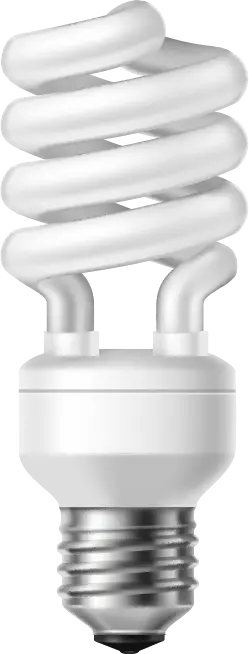
CFL fluorescent bulb
Efficiency: moderate.
CFLs are more efficient than incandescent lamps, with typical values of 50-70 lm/W.
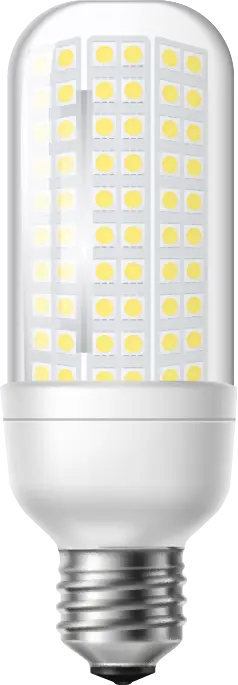
LED lights
Efficiency: High.
LED lights are known for their high efficiency. They can easily exceed 100 lm/W and even reach values above 150 lm/W in some applications.
At Actilum, High Efficiency is not just a feature; it is the tangible breakthrough that redefines the future of LED lighting.
Our systems not only represent a technical achievement in exceeding lighting performance standards, but embody a strong commitment to sustainability and innovation.